





What a Conversational Website Is, and What It Cannot Fix
 Mar 19,2026
  By TonePilotAI
In short:
A conversational website lets visitors ask for what they need instead of guessing which menu item hides it. It does not replace navigation, because the answers are retrieved from the same pages the menu points at. Weak content produces weak conversations, and the questions visitors ask are the most useful thing the layer produces.
The replacement story
Menus are not dead. The most repeated claim in this category is that conversation is replacing navigation as the main way people move through a website, and the numbers offered as proof almost never carry a source. You will find published assertions that conversational design cuts bounce rates by forty percent, or lifts engagement by three hundred percent, with no statement of who measured it, on what sample, over what period. When a claim has no owner it cannot be checked, and a claim that cannot be checked is not evidence.
The defensible version of the shift is quieter than that. Navigation asks a visitor to predict where information lives before they can reach it, while a conversation layer lets them describe what they want and works out where the answer sits. Privas AI frames the two as different interaction models rather than competing trends, one built around structure and the other around intent. That framing survives contact with a real website, and the replacement framing does not.
Satisfi Labs is the useful case, because the company rebuilt its own site around a full-page chat experience instead of a corner widget. What it shipped keeps familiar navigation on the left of the layout and runs the conversation beside it, with links that hand the visitor off to a classic page whenever a page is the better answer. A team that went further toward chat-first design than almost anyone still would not remove the menu.
The content dependency
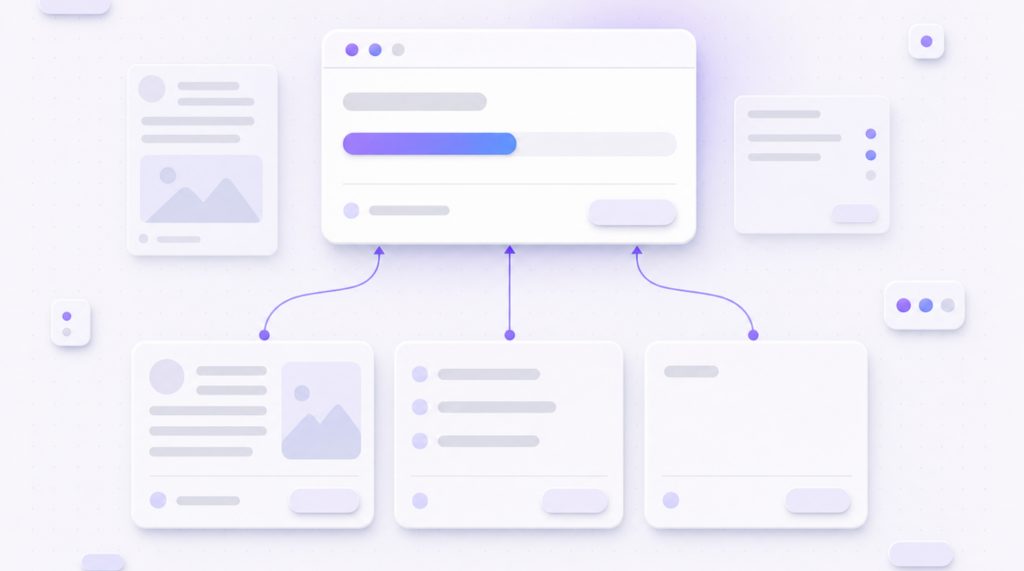
Here is the part the definitional posts skip. A conversation layer answers by retrieving passages from pages you have already published, so the quality ceiling on every answer is set by the quality of the writing that is already live. If your service page never states which industries you work with, no amount of retrieval will produce that answer, and the layer will either hedge or decline to answer at all.
That is why the order of operations matters more than the technology choice. A site with thin, duplicated or contradictory pages will produce a layer that hedges, contradicts itself, or keeps pointing visitors at the one page that happens to be specific. Correcting the pages improves the answers without touching the setup, because the retrieval reads the corrected text on the next crawl. How the layer is wired into a site matters far less than what it has been given to read.
Retrieval also receives a different kind of input from search, and that has a practical consequence. Natural language queries run around three times longer than traditional keyword searches, so the layer gets much more context about what the visitor is actually trying to decide. Longer input matches a page that states something specific, and matches a page of general claims poorly.
The question log
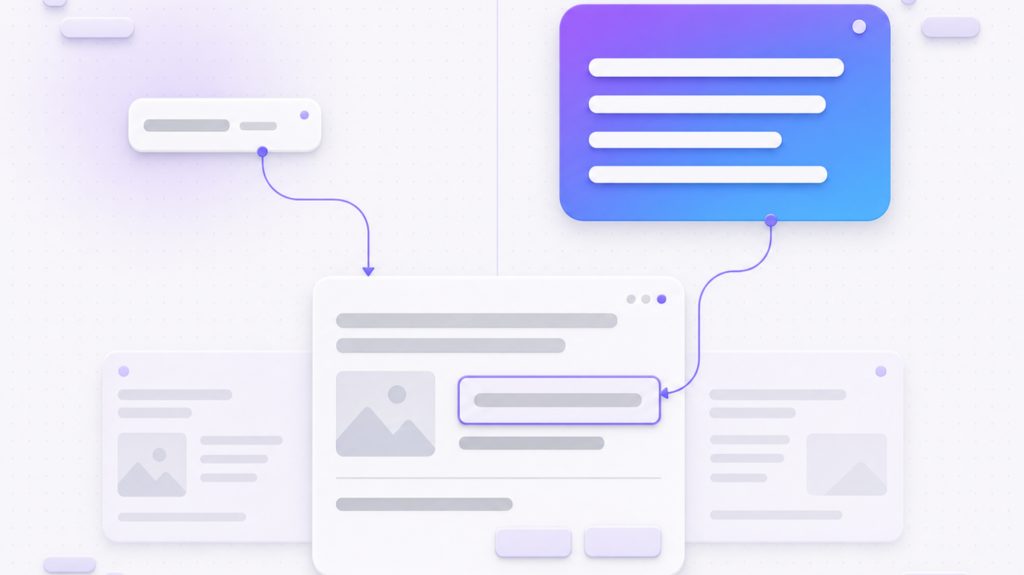
The most valuable output of a conversation layer is not the answers it gives. It is the record of what visitors asked, in their own words, at the moment they were closest to a decision. That record is the nearest thing a website gets to unfiltered usability data, and most sites collect nothing comparable.
AddSearch found that more than eighty percent of companies neither optimise nor properly measure their own internal site search, which means the questions visitors were already typing went unread for years. A conversation layer surfaces the same signal in a richer form, since people write full sentences to a chat and two keywords to a search box. Reading one week of that log will usually tell you which page is missing, which paragraph is ambiguous, and which objection your site has never addressed.
Treated this way the layer stops being a support widget and becomes an instrument. Any question asked more than a handful of times is either a page you should write or a section you should rewrite, and once the writing exists the answers improve on their own. This is also why capturing the conversation instead of the click changes what you learn about the demand arriving on your site.
The role navigation keeps
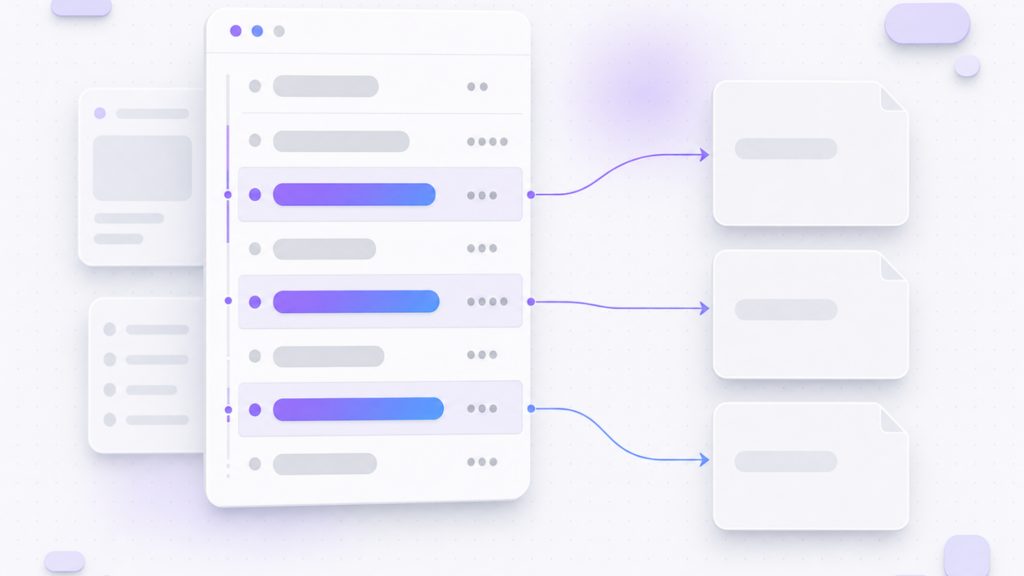
Navigation still does two things a conversation is bad at. It shows the shape of what exists, which is how a visitor discovers that you offer four services rather than one, and it gives people who already know what they want a single click instead of a sentence. Take it away and every visitor has to articulate a request, including the ones who only wanted the contact page.
Scale is the second argument for keeping it. Zalando deployed conversational search across twenty five markets serving more than two million users, and it did so alongside the existing structure rather than in place of it. A large catalogue needs both a map and a guide, and the guide is only useful once the map is accurate.
The order of operations
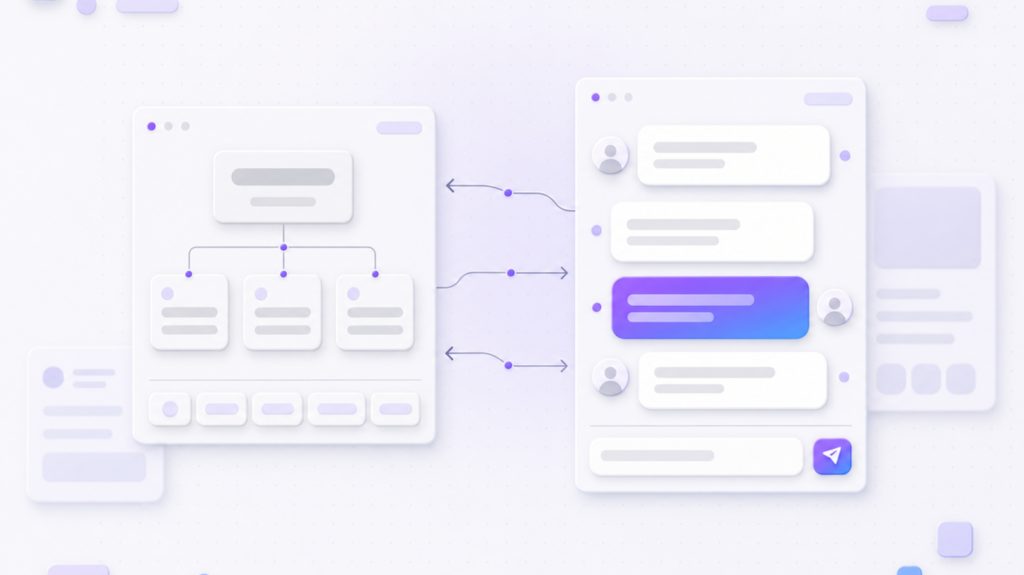
The sequence that works here is unglamorous. Audit the pages a visitor has to read in order to decide, rewrite the ones that answer nothing specific, then add the conversation layer so that it has something worth retrieving. Run it the other way round and you get a confident-sounding layer built on vague pages.
The technical side is the easy part, and adding the layer to an existing site is usually a same-day job once the content is in order. The real judgement call is which pages deserve rewriting first, and the question log answers that within a week of going live. If you want a plan, a timeline and a quote for setting this up on your own site, email hello@tonepilotai.com and describe what your pages currently cover.
FAQ
Does a conversational website mean removing my menu?
No, and the teams that went furthest toward chat-first design kept theirs anyway. Navigation shows visitors the shape of what you offer, which a conversation cannot do until the visitor already knows enough to ask. Keep both and let each one handle what it is good at.
How much content work comes before the layer is worth adding?
It depends on how specific your existing pages already are. Most sites need a handful of pages rewritten rather than a full rebuild.
What do I actually do with the questions visitors ask?
Group them by frequency and look for the ones your site never answers directly, because each of those is a missing page or an ambiguous paragraph. Rewrite the page and the answer quality improves on the next crawl, with no change to the configuration. Anything that repeats weekly usually deserves its own section rather than a line buried mid-paragraph.
Will this work on a small site with only a few pages?
Yes, and small sites often see the clearest benefit, because a short site tends to hide its detail rather than lack it. The constraint is depth of writing, not page count.